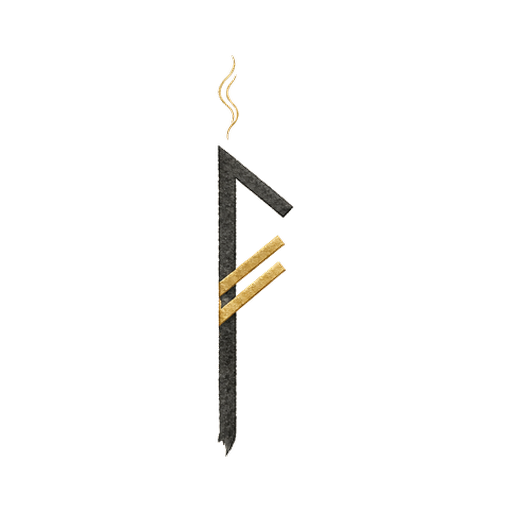
What Is a Bindrune? Joining Runes Into One Intention
A bindrune is two or more runes drawn as a single figure, usually sharing one vertical line. Instead of writing the runes side by side, you let them overlap, so that a whole phrase becomes one mark.
Bindrunes are popular today on jewelry, in tattoos and in journals, often as a way to fold one intention into a single symbol. This post looks at where they come from, what is history and what is modern practice, and how to draw a simple one yourself. As with everything we write about runes, we treat them as symbols and tradition, not as charms or predictions.
Where bindrunes come from
Ligatures in old inscriptions
The word comes from the Old Norse bandrún, a “bound rune”. At their most practical, bindrunes were ligatures: two letters joined to save space or effort, much as a scribe might join letters in Latin script. Carving into wood, bone or stone is slow work, and sharing a stroke between two runes was efficient.
Joined runes do appear in Elder Futhark inscriptions, though they are not common. One often cited example is the Kragehul spear shaft from Denmark, where a repeated sequence is usually read as Gebo and Ansuz bound together. Scholars still debate what such sequences meant, and it is worth holding any single interpretation lightly.
A bindrune you probably own
The best-known bindrune today is on your phone or headphones. The Bluetooth logo combines two Younger Futhark runes, Hagall (ᚼ) and Bjarkan (ᛒ), the initials of the Danish king Harald Bluetooth. It is a monogram, which is a good way to think of most bindrunes: initials, made into a single shape.
What is modern
Designing a bindrune around a personal intention, or as a protective sign, is largely a modern practice. It draws on the older ligatures and on later Icelandic magical staves, but those staves are a separate tradition from the Elder Futhark. We do not present bindrunes as having power. A bindrune is a way to write something down that is personal enough to keep.
How to draw a simple bindrune
1. Start with the sentence
Before choosing any runes, write the intention in plain words, as you would on a strip of paper. One line is enough. Our guide to writing an intention that fits on one line walks through this.
2. Choose two or three runes
Pick runes whose meanings sit close to the words in your sentence. Two is often clearer than three. Some pairings people choose:
- Gebo (ᚷ) and Wunjo (ᚹ): gift and joy, for a friendship.
- Jera (ᛃ) and Berkano (ᛒ): harvest and birch, for patience with a new start.
- Isa (ᛁ) and Laguz (ᛚ): ice and water, for a pause before things move again.
3. Share one stave
Draw a single vertical line, then add the strokes of each rune to it. Many runes already have a vertical stave, so they combine easily. Gebo, an X, can sit across the line.
4. Keep it simple
Look at the finished shape and check that it is still readable to you. A common guideline is to notice whether the combined strokes accidentally form other runes, and to decide whether that is fine with you. Fewer strokes usually make a cleaner mark.
5. Put it somewhere you will see it
Draw it on the reverse of a paper incense strip next to your sentence, in a notebook, or on a card on your tray.
I draw the bindrune small, in the corner of the strip, next to the sentence.
Using a bindrune in the evening ritual
The ritual stays the same three motions from our Ritual Guide:
- Write. Your sentence on the reverse of the strip, with the bindrune beside it.
- Light. The written edge, with matches or a lighter, then rest the strip in a clamp or on a heat-proof dish.
- Let go. Do not blow it out. Stay in the room and let it burn to ash.
Burning the strip is a way of finishing the gesture. If you want to keep the shape, draw it twice and keep one copy.
Bindrunes and jewelry
Each piece in our Ritual Jewelry collection carries a single rune, chosen for what the word means: Gebo, Jera, Laguz, Isa and others. Some people wear two pieces together as a loose kind of bindrune, two words worn side by side. They are reminders, not charms.
Frequently asked questions
What is a bindrune?
Two or more runes drawn as one figure, usually sharing a vertical stave. Historically they were often ligatures; today they are usually personal monograms or symbols of an intention.
Are bindrunes historically authentic?
Joined runes appear in some early inscriptions, so the idea is old. Designing them around personal intentions is largely modern.
How many runes should a bindrune have?
There is no rule. Two or three is common, because the shape stays readable.
Does a bindrune do anything?
We do not present it that way. It is a way to write an intention in one mark, not a tool that makes something happen.
One mark, one sentence
Write the sentence first. Then find the two runes that sit closest to it and let them share a line.