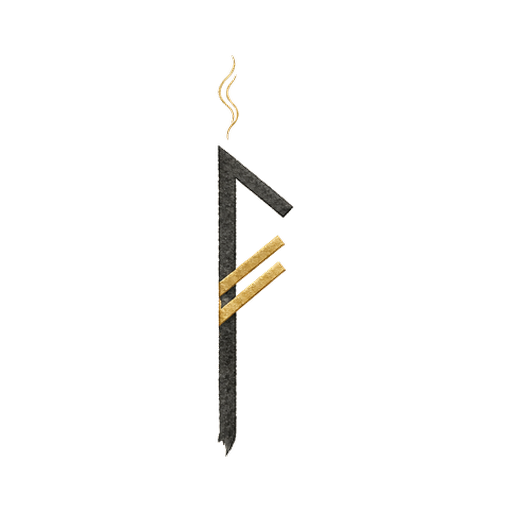
Fehu, Algiz, Gebo: Three Runes Behind Abundance, Protection and Love
Our kits are grouped by three intentions: abundance, protection and love. Each one is a direction you might write on a strip of paper. And each has a rune in the Elder Futhark whose name sits close to it: Fehu, Algiz and Gebo.
This post looks at all three: what the names meant, what the medieval sources actually say and how each rune is read today. As in our beginner’s guide to the 24 rune meanings, we treat runes as symbols and tradition, not as charms or predictions.
A note on sources
The names of the Elder Futhark runes are scholarly reconstructions in Proto-Germanic. Much of what we know about their meanings comes from three medieval rune poems, in Old English, Old Norwegian and Old Icelandic, written centuries after the Elder Futhark was in use. Where we quote them below, we are paraphrasing well-known translations. Modern meanings build on these sources, and sometimes go well beyond them.
Fehu (ᚠ): abundance
The name
Fehu is the first rune of the futhark, and its name means cattle or livestock. The same root survives in the English word fee and the German Vieh, cattle. In a herding culture, livestock was movable wealth: something you could own, trade and give.
What the rune poems say
All three rune poems treat this rune as wealth. The Old English poem is the most often quoted: wealth is a comfort to everyone, yet each person should share it freely if they hope to be honoured. The Norse poems are warier, noting that wealth can cause strife between kin.
How Fehu is read today
The Fehu rune meaning most people give today is abundance: prosperity, resources and the work that brings them. The rune poems add a useful second half. Wealth is good, and it is meant to move. Abundance, in this reading, includes giving.
Fehu as an intention
If Fehu is the rune you are drawn to, the sentence on the strip might be about enough rather than more:
- “Notice what I already have.”
- “Finish the work that pays the rent, then stop.”
- “Share one thing this week.”
Our Abundance collection gathers pieces and kits around this intention, including The Abundance & Power Kit: oud and vetiver, citrus and cedar, and lemon and honey.
Algiz (ᛉ): protection
The name
Algiz is the fifteenth rune, and its name is the least certain of the three. It is usually reconstructed as elk. The shape, a vertical line with two arms raised, has invited many readings: antlers, a hand held up, a branching plant.
What the rune poems say
The Old English rune poem gives this rune a different name, eolh-secg, usually translated as elk-sedge, a marsh grass. The poem describes it as growing in water and cutting anyone who grasps it. The two Norse poems use the rune for a different sound and a different word altogether.
How Algiz is read today
The common modern reading of Algiz is protection, drawing on the raised-arm shape and the idea of a plant that defends itself. It is worth knowing that this meaning is largely modern interpretation, not something the medieval sources state directly.
Algiz as an intention
Protection, in a daily sense, often means boundaries. The sentence on the strip might be:
- “Keep Sunday for myself.”
- “Say no once, kindly.”
- “Leave the phone in the other room tonight.”
Our Protection collection gathers pieces and kits around this intention, including The Protection & Peace Kit: white tea and mugwort, then cypress and moss.
I like that the old poem says wealth is meant to be shared.
Gebo (ᚷ): love and partnership
The name
Gebo is the seventh rune, and its name means gift. The shape is a simple X: two lines that meet in the middle and need each other to stand.
What the rune poems say
The Old English rune poem calls this rune gyfu and describes generosity as something that brings credit and honour, and that offers help to those who have nothing else. The rune does not appear in the Younger Futhark, so it has no Norse rune poem.
How Gebo is read today
Gebo is usually read as exchange, generosity and partnership: the gift that goes both ways. That is why it is so often associated with love. In this reading, love is less about receiving and more about the balance between two people.
Gebo as an intention
The sentence on the strip might be about giving, or about someone in particular:
- “Write the letter I keep meaning to write.”
- “Listen first at dinner.”
- Or simply a name.
Our Love collection gathers pieces and kits around this intention, including The Love & Awakening Kit. Gebo also appears on two pieces of our ritual jewelry, the Crimson Bloom Bracelet and the Sky of Affection Bracelet.
Using the three runes together
You do not need to choose one forever. Many people move between them with the seasons: Fehu during a busy stretch of work, Algiz when the calendar fills up, Gebo when someone is on their mind. The rune is a reminder. The sentence is the practice.
Whichever you choose, the ritual is the same three motions from our Ritual Guide: write one sentence on the reverse of the strip, light the written edge, and let it burn to ash without blowing it out.
Frequently asked questions
What is the Fehu rune meaning?
Fehu means cattle, and by extension wealth. Today it is usually read as abundance, with the old rune poems adding that wealth is meant to be shared.
Is Algiz a protection rune?
That is its most common modern reading. Its original name is uncertain, usually reconstructed as elk, and the protection meaning is largely a modern interpretation.
Why is Gebo associated with love?
Gebo means gift. It is read as exchange and partnership, the balance between two people, which is why it is often linked to love.
Do these runes bring abundance, protection or love?
We do not present them that way. They are symbols that sit beside an intention, not tools that cause anything to happen.
Choose the word, then the rune
Start with the sentence you are ready to write. If it is about enough, it may be Fehu. If it is about boundaries, Algiz. If it is about someone else, Gebo.